RGHTEOUS GAMBT
Wesley Ladd
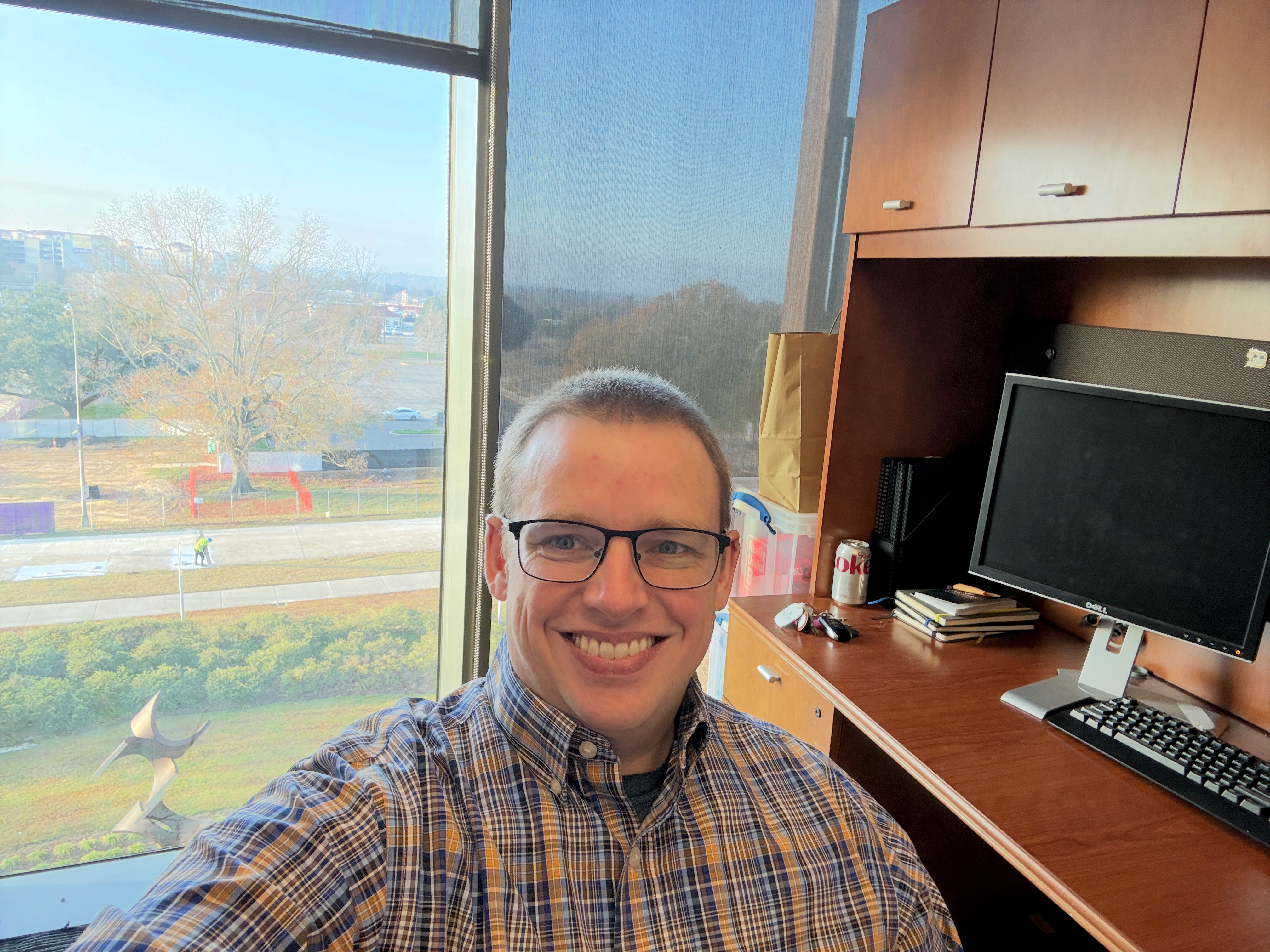
I build technology that has to work in the field, then ask whether its output is a measurement or merely a convincing guess.
That question connects my work as CEO of Holmdel Labs and CTO of Polaris EcoSystems. At Holmdel, I lead early-stage R&D in embedded intelligence, sensing, and measurement. At Polaris, I lead technology across geospatial systems, computer vision, 3D reconstruction, and infrastructure assessment. Both roles converge on the same problem: turning ambiguous physical signals and model outputs into measurements and decisions people can defend. when does a model's output become a measurement you can defend?
My research asks when machine perception becomes measurement.
Monocular depth estimation, SLAM, and multi-view reconstruction produce geometry that looks convincing but lacks the calibrated uncertainty, sensor traceability, and error characterization that metrology requires. I believe closing that gap will unlock new frontiers in computer perception, and by extension, in what AI-based systems are capable of when they have to be right, not just plausible. I am extending the same question into embedded and multimodal sensing, where measurements must remain defensible despite cross-sensitivity, drift, and imperfect models. I lay out the research direction in Your Depth Map Is Not a Measurement and the epistemological scaffolding in The State Space of Research.
I have originated funded research programs around automation, assurance, and cyber risk.
At LSU, I originated the proposal for a Louisiana Board of Regents-funded AI Cyber Risk Lab focused on automating cybersecurity assessment and remediation for small businesses. I left LSU before serving as its PI or participating in project execution. I also originated and authored the proposal, and served as its submitted PI, for the project later funded as NSF EAGER Award No. 2627426, Predictive Front-Running of U.S. Research Trajectories. For that project as well, I left LSU before the award was issued and the project began. Previously, I was Associate Director of the Center for Internal Auditing and Cybersecurity Risk Management in LSU's E.J. Ourso College of Business and taught internal audit, cybersecurity risk management, AI, and ESG.
The cybersecurity work connects research to tools practitioners actually use.
I founded TrainGRC, a continuing professional education platform for governance, risk, and compliance professionals, and built Quiet Riot, an open-source cloud security research tool featured in TL;DR Sec and cloudseclist and adopted by several closed-source security platforms. I'm also a contributor to Hacking the Cloud, the community knowledge base for offensive cloud security techniques. Building tools that practitioners actually use keeps the research grounded in operational reality.
I translate AI from abstraction into decisions professionals can defend.
I coauthored Practical AI for Professionals: Understanding, Using, and Surviving AI, a 412-page professional guide published by Chapman & Hall / CRC Press in 2026. I also speak to technical, professional, and university audiences about production AI architectures, retrieval-augmented generation and system failure modes, and responsible AI adoption.
Recent writing
All posts →A Market Is a Machine for Telling You Things You Don't Want to Hear: On price signals, moral hazard, and the going rate for a different answer
August 3, 2026
In much of America it is illegal to buy a car from the company that made it. Pull that thread and it keeps going: crop insurance, exclusion petitions, deposit insurance, a $110 price floor, and emergency orders for power plants that produced zero electricity. Every claim is sourced.
Against College as a Business
July 31, 2026
A business is defined by a loss condition. The university has none, which makes "run it like a business" a category error rather than a reform. What the costume displaced, the one activity where the commercial logic operates at full competence, and what happened when the institution was finally asked to refuse something.
The State Space of Research: Toward a Phenomenology of Perception (the Machine Kind)
March 24, 2026
Benchmarks, ablations, and peer review aren't bureaucracy — they're the mechanism by which a field builds reliable knowledge. A walkthrough of the operational epistemology of CV research.
Contact
© 2026 Wesley Ladd. All rights reserved.
Last updated: 8/22/2026